
Disclosure: There are no affiliate links in this post. Some future posts may contain affiliate links; when they do, we’ll say so clearly at the top of the post.
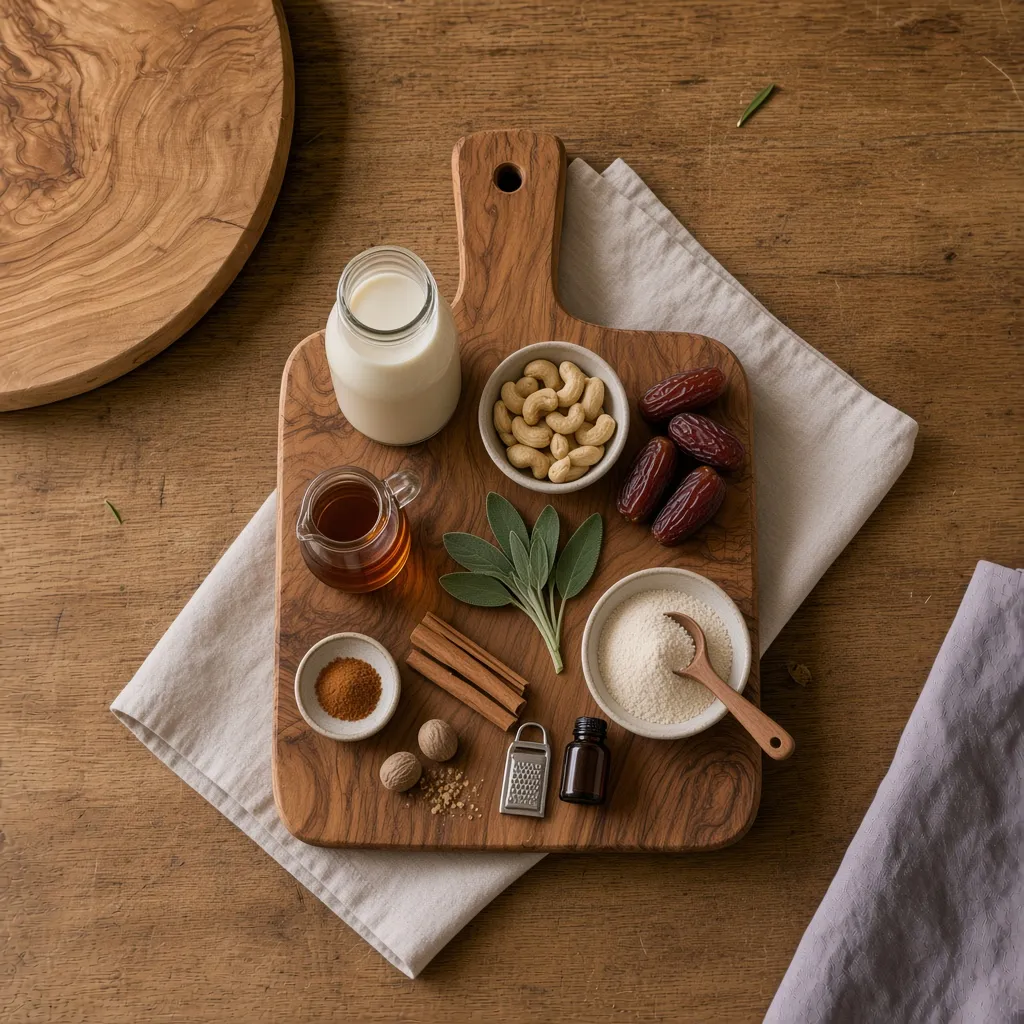
Eggnog is one of those drinks that feels like Christmas in a glass: creamy, softly spiced and fragrant with nutmeg. This vegan eggnog recipe keeps all of that and leaves out the eggs, dairy and alcohol. It’s made with your choice of oat, almond or cashew milk, blended with soaked cashews for body, thickened with a spoonful of cornflour, and spiced with Ceylon cinnamon and freshly grated nutmeg.
It’s naturally sweetened with dates or maple syrup and is refined-sugar-free, as long as your plant milk and vanilla have no added sugar (check the labels). Serve it warm on a cold evening or chilled from the fridge at a Christmas gathering. Everyone at the table can have a glass, whether they’re vegan, avoiding dairy or eggs, or simply not drinking. You’ll find it alongside our other Christmas mocktails for grown-ups. It pairs nicely with a sharper, sparkling drink like our cranberry and rosemary sparkler.

What makes this vegan eggnog work
Traditional eggnog gets its richness from egg yolks, cream and milk. Here, each job is done by a plant-based ingredient:
- Soaked cashews blend into a smooth cream that gives the drink body.
- A little cornflour, cooked briefly, adds a gentle custardy thickness.
- Dates or maple syrup bring sweetness with a hint of caramel.
- Ceylon cinnamon and nutmeg give it that unmistakable festive flavour.
Why Ceylon cinnamon?
Ceylon cinnamon has a mild, delicate, slightly floral flavour that sits nicely in a creamy drink. There’s also a practical reason we like it for recipes you might make again and again over the festive season. Germany’s Federal Institute for Risk Assessment (BfR) explains that cinnamon broadly falls into two types: Ceylon cinnamon, which contains only low levels of coumarin, and cassia cinnamon, which contains higher levels. The BfR recommends eating cassia cinnamon in moderation and suggests that people who regularly use large amounts of cinnamon choose Ceylon.[1][2]
Most supermarket ground cinnamon doesn’t say which type it is, so look for “Ceylon” on the label. According to the BfR, Ceylon sticks are also easy to spot: several fine, papery layers rolled together, with a cross-section like a cut cigar, whereas cassia sticks are a single thicker curl of bark.[1]
Equipment
- High-speed or jug blender
- Medium saucepan and balloon whisk
- Fine-mesh sieve (optional, for the silkiest texture)
- Nutmeg grater or microplane
- Small glasses or punch cups
For more kit, see home mocktail bar essentials and our guide to mocktail glasses.

Vegan Alcohol-Free Eggnog
Ingredients
Equipment
Method
- Put the cashews in a heatproof bowl, cover with just-boiled water and leave to soak for 30 minutes. Drain and rinse.
- Put the drained cashews, dates (or maple syrup), cornflour, ground cinnamon, nutmeg, cloves (if using), salt, turmeric (if using) and 400 ml of the plant milk in a blender. Blend on high for 1–2 minutes, until completely smooth with no gritty bits.
- Pour the mixture into a saucepan, then add the remaining 400 ml of plant milk and the cinnamon stick.
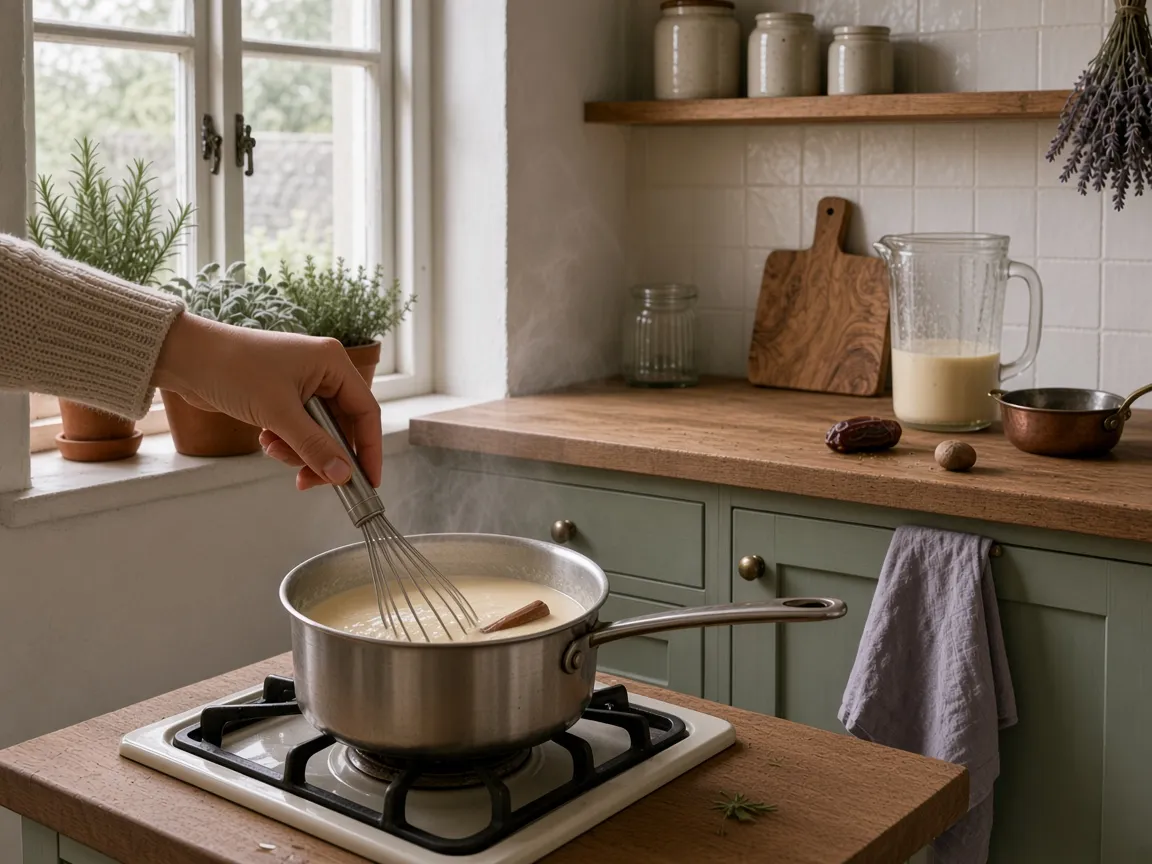
- Warm over a medium-low heat for 6–8 minutes, whisking constantly, until it comes to a gentle simmer and thickens slightly. Let it bubble gently for 1 minute so the cornflour cooks out.
- Take the pan off the heat, remove the cinnamon stick and stir in the vanilla. Taste and add a little more maple syrup or spice if you like.
- For an extra-silky texture, pour through a fine-mesh sieve. Serve warm, or cool, cover and chill for at least 2 hours, then whisk well before serving.
- Pour into small glasses or cups and finish with a little freshly grated nutmeg.
Notes
Variations
- Choose your milk: Oat milk makes the creamiest, most neutral eggnog. Almond is lighter, with a gentle nutty note. Cashew milk is the richest. You can also mix them.
- Nut-free version: Leave out the cashews, use oat milk (or soya milk) and increase the cornflour to 2 tbsp (about 16 g), whisked into the cold milk before heating. It will be lighter in body but still smooth and spiced.
- Extra-rich: Swap 200 ml of the plant milk for tinned full-fat coconut milk. This adds a subtle coconut flavour.
- Maple and almond: Use maple syrup rather than dates and add a few drops of almond extract or a pinch more cinnamon.
- Other natural sweeteners: Swap the dates or maple for 60 ml agave syrup or date syrup. Runny honey also works, but then the eggnog is no longer vegan. Honey is not suitable for babies under 12 months (see the NHS advice on foods to avoid giving babies and young children).
- Stevia: Stevia is much sweeter than sugar, dates or maple. Leave out the dates and maple, start with a very small amount (a couple of drops of liquid stevia, or a small pinch of powder, for the whole batch), and sweeten to taste. The eggnog will be slightly thinner without the dates.
- Gingerbread nog: Add ½ tsp ground ginger and a pinch of allspice with the other spices.
- Iced nog: Blend chilled eggnog with a few ice cubes and an extra Medjool date for a frothy, frappé-style drink.
Serving and garnish tips
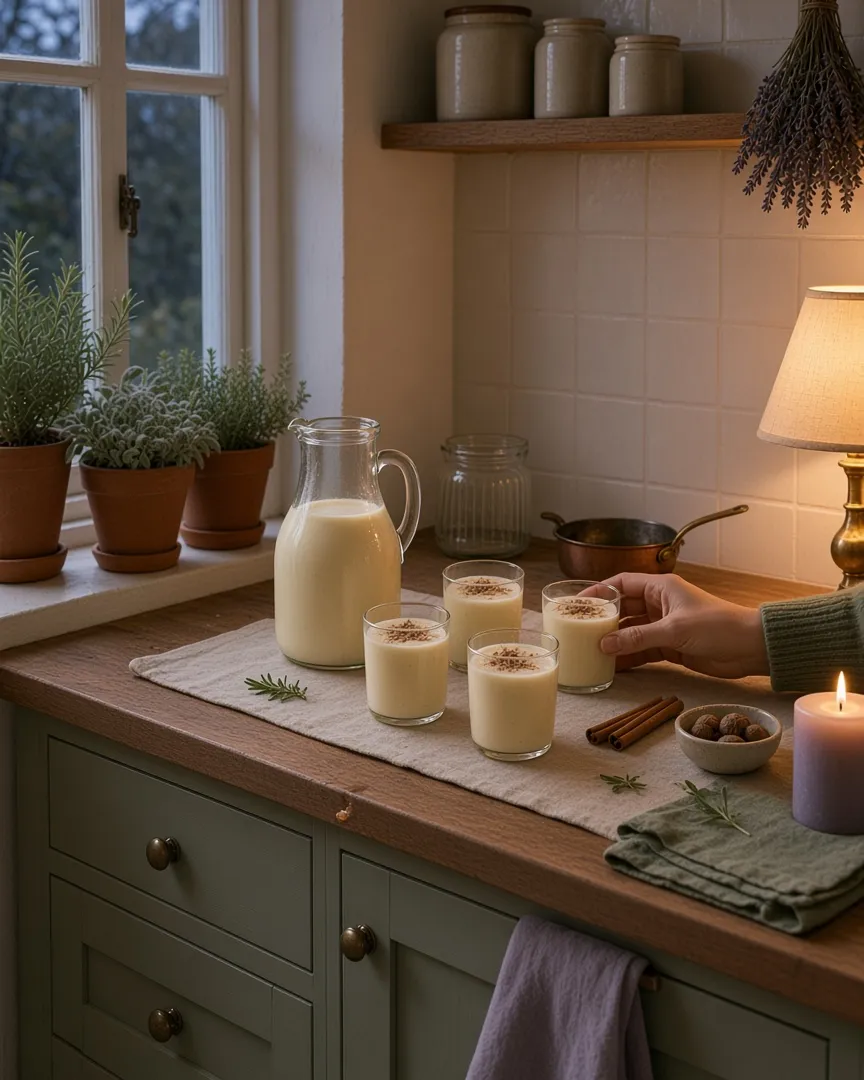
- Warm: Serve in small heatproof glasses or cups straight from the pan, with a dusting of freshly grated nutmeg.
- Chilled: Whisk or shake well, then pour into small glasses. Eggnog is rich, so small servings (about 150–200 ml) feel right.
- Garnish: Freshly grated nutmeg is the classic finish. Add a Ceylon cinnamon stick as a stirrer, or a pinch of ground cinnamon.
- Cinnamon rim (optional): Run a little maple syrup around the rim of each glass and dip it in ground Ceylon cinnamon.
- Party jug: Make a double batch the day before, chill, and serve from a jug with a small bowl of whole nutmegs and a grater alongside so guests can finish their own.
Make-ahead and storage
Make the eggnog up to 2 days ahead. Cool it quickly, then keep it covered in the fridge and drink it within 2 days. It thickens as it chills and may separate slightly, so whisk or shake it well and loosen with a splash of plant milk if needed. To serve warm, reheat gently in a saucepan, whisking, until hot all the way through. We don’t recommend freezing it, as the texture can turn grainy.
Allergy and ingredient notes
Please check before you make it:
- Tree nuts: This recipe contains cashews, and almond or cashew milk if you use them. It is not suitable for anyone with a tree-nut allergy. See the nut-free variation above, and check that your plant milk is made in a nut-free environment if that matters to you.
- Oats and gluten: Oats are often grown and processed alongside wheat, barley and rye. If you need to avoid gluten, choose an oat milk labelled gluten-free, or use a different plant milk.
- Coconut: If you use the coconut milk variation, check with guests who may have a coconut allergy.
- Nutmeg: Use nutmeg in small culinary amounts only, as in this recipe (a pinch or a light grating per glass). It isn’t an ingredient to use in large quantities.
- Cinnamon: Keep cinnamon to normal culinary amounts too. We use Ceylon cinnamon for the reasons explained above.
- General: If you’re pregnant or breastfeeding, taking medication, or have allergies or a health condition, check with your GP or pharmacist if you’re unsure about any spice or ingredient. Don’t use concentrated extracts or essential oils in drinks.
- Hot drinks: Take care when serving warm eggnog, especially to children.
- Vegan and sugar check: Most plant milks, cornflour, dates, maple syrup and vanilla extract are vegan, but always check labels if you’re cooking for someone who is strictly vegan. Check plant milk and vanilla labels for added sugar too.
FAQ
What is vegan eggnog made of?
This vegan eggnog is made with plant milk (oat, almond or cashew), soaked cashews for creaminess, a little cornflour for body, dates or maple syrup for natural sweetness (no refined sugar), and Ceylon cinnamon, nutmeg, vanilla and a pinch of cloves for that classic festive flavour. It contains no eggs, dairy or alcohol.
Can I make eggnog without eggs?
Yes. Eggs normally give eggnog its thick, custardy texture. In this recipe, blended soaked cashews provide the richness, and a spoonful of cornflour, briefly simmered, adds gentle thickness. The result is creamy and almost spoonable when chilled, with the same warm nutmeg and cinnamon spice you’d expect.
Which plant milk is best for vegan eggnog?
Unsweetened oat milk gives the creamiest, most neutral result and is our first choice. Almond milk makes a lighter eggnog with a delicate nutty note, and cashew milk is the richest. If you need it gluten-free, choose an oat milk labelled gluten-free, or use almond or cashew milk.
Is this eggnog alcohol-free?
Yes, as written it contains no alcohol at all, so it’s suitable for everyone at the table. Some vanilla extracts are made with alcohol, but only a teaspoon is used across four servings. If you want to avoid even that, use an alcohol-free vanilla flavouring or the seeds from a vanilla pod.
Is this eggnog refined-sugar-free?
Yes. It’s naturally sweetened with Medjool dates or maple syrup, with no white, caster or other refined sugar. Plant milks and vanilla extracts sometimes contain added sugar, so choose an unsweetened plant milk and check the vanilla label before you buy.
Can I make vegan eggnog ahead?
Yes. Make it up to 2 days ahead, cool it quickly and keep it covered in the fridge. It thickens as it chills, so whisk or shake well and loosen with a splash of plant milk before serving. Reheat gently, whisking, if you’d like it warm.
Can I make it without nuts?
Yes. Use the nut-free variation: leave out the cashews, use oat or soya milk, and increase the cornflour to 2 tbsp. It’s lighter in body than the cashew version but still smooth, creamy and spiced. Check your milk’s label if you’re cooking for someone with a nut allergy.
Related recipes
- Cranberry & Rosemary Sparkler
- Warm Spiced Apple & Rosemary Punch
- Rosemary Syrup Recipe for Mocktails
Sources
- German Federal Institute for Risk Assessment (BfR), “FAQ on coumarin in cinnamon and other foods” (dated 27 September 2012) (accessed 31 October 2026).
- German Federal Institute for Risk Assessment (BfR), “Cassia cinnamon with high coumarin contents to be consumed in moderation”, press release (dated 27 September 2012) (accessed 31 October 2026).
